
There is a new rhythm to the Georgian air this year. For centuries, the high valleys of the Caucasus were defined by a slow, ancient silence, but today, that stillness is being replaced by the hum of a nation in motion. In 2026, Georgia has “folded” its geography. The rugged distances that once required a full day of mountain driving have collapsed, turning the entire country into a single, synchronized heartbeat stretching from the Black Sea to the wine-stained valleys of the East.
The legendary “Big Three”—Tbilisi, Batumi, and Kutaisi—are no longer distant outposts; they are now chapters in a single, high-speed story. The revolution of 2026 is driven by two game-changers: the full completion of the Rikoti Pass highway, which has sliced travel times in half, and a sophisticated new mandatory insurance policy that ensures every traveler is protected from the moment they cross the border.
It is time to throw away your old maps. Georgia is no longer a collection of disconnected islands separated by treacherous passes; it is a modern corridor where 5G-powered cafes and 1,000-year-old fortresses live side-by-side. Whether you are chasing the “ruin aesthetics” of ancient Kutaisi or the neon-lit surf of Batumi, the 2026 landscape offers a seamless blueprint: the soul of the Old World, delivered with the efficiency of the New.
Quick Facts: Georgia Cities Data Card (2026)
-
Total Official Cities/Towns: 64
-
Urbanization Rate: 62.2%
-
Largest City: Tbilisi (1.251 million residents)
-
Mandatory Rule: All foreign visitors must hold health insurance (min. 30,000 GEL coverage).
Top 5 Georgia Cities by 2026 Population
| Rank | City Name | 2026 Est. Population | Core Persona |
| 1 | Tbilisi | 1,251,000 | The Hybrid Heart: Retro meets Modern |
| 2 | Batumi | 185,000 | The Black Sea “Las Vegas” |
| 3 | Kutaisi | 131,000 | The Gateway to Ancient Ruins |
| 4 | Rustavi | 128,000 | The Industrial Powerhouse |
| 5 | Zugdidi | 41,000 | The Royal Mountain Gateway |
Which major Georgia cities should you prioritize in 2026?
1. Tbilisi | The Crazy Stitching of Old and New
Tbilisi is the soul of the country where 5th-century sulfur baths sit directly next to 2026 high-tech coworking spaces. My favorite “hook” is the Narikala Fortress. From its ancient walls, you can see the steam rising from the historic baths while the ultra-modern Peace Bridge glows in the background.
In 2026, the experience has been upgraded with full 5G coverage across the Old Town. I spent many mornings sitting in a carved wooden balcony cafe, working remotely with high-speed internet while listening to church bells. It is a city of “seams”—where the Soviet past, Persian influence, and European future are sewn together in a chaotic, beautiful way.

2. Batumi | The “Las Vegas” of the Black Sea
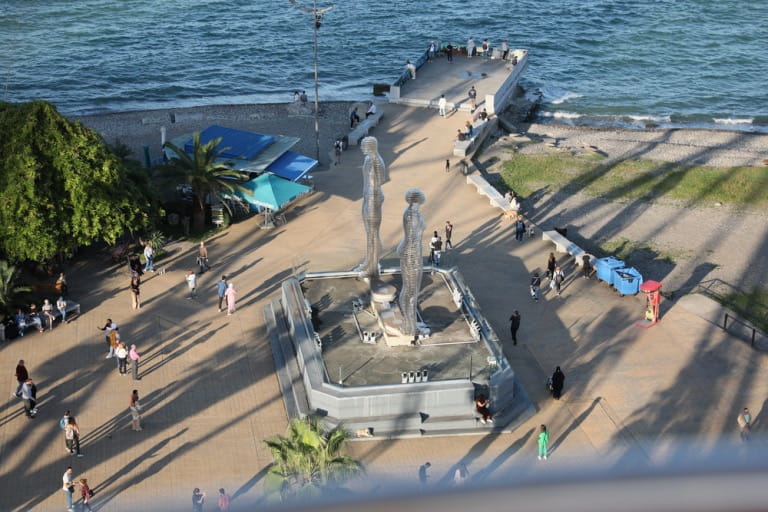
Batumi is a seaside metropolis famous for its futuristic skyline and the iconic “Ali and Nino” moving steel statue. This statue represents an eternal cycle of meeting and parting, and it remains the visual heart of the city. I found that the vibe here is much faster and more “electric” than in the capital.
The 2026 experience is all about mobility. The newly completed 2026 Coast Promenade allows you to ride an electric bike for miles along the Black Sea without ever leaving the bike path. Between the luxury casinos and the stone beaches, Batumi has become a hub for those who want the sea breeze mixed with a high-energy nightlife.
3. Kutaisi | The Millennium of “Ruin Aesthetics”
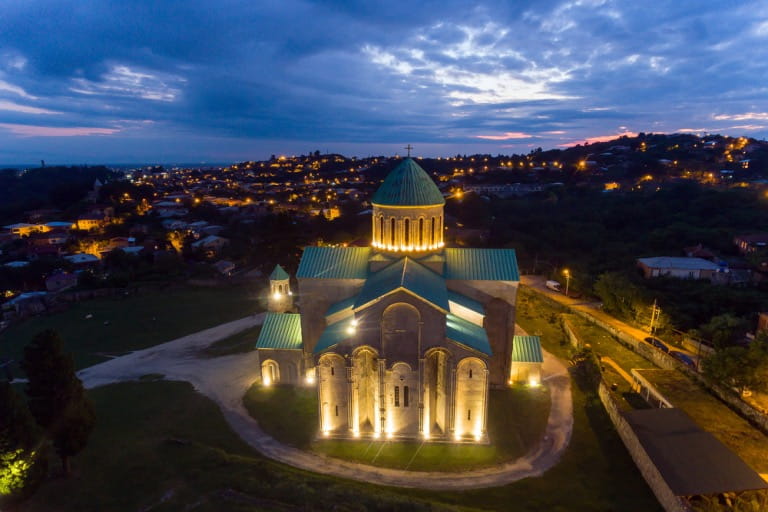
Kutaisi is one of the oldest continuously inhabited cities in the world, defined by the massive Bagrati Cathedral overlooking the Rioni River. While Tbilisi is about the future, Kutaisi is about the deep past. I love the “raw” feeling of this city; it feels authentic and untouched by heavy commercialism.
In 2026, Kutaisi has become much more accessible. Thanks to the Rikoti Highway completion, you can now reach Kutaisi from Tbilisi in just 2.5 hours, making it the perfect base for canyon exploration. Whether you are visiting the Prometheus Caves or the Martvili Canyon, Kutaisi serves as the most affordable and strategic “nature hub” in Western Georgia.
What are the 2026 survival rules for Georgia cities?
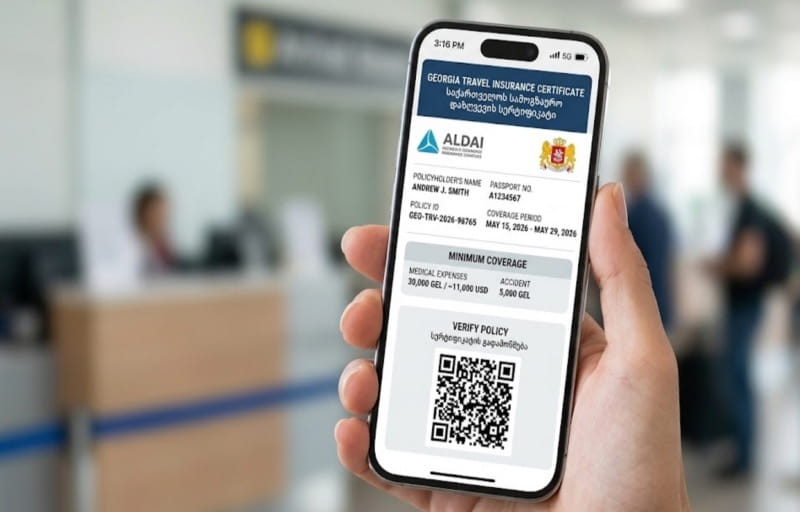
Since January 1, 2026, all foreign visitors must hold valid medical insurance with a minimum coverage of 30,000 GEL to enter any Georgian city. This is the “kill shot” for old travel guides—if you don’t have this, you are in trouble. I found that border agents and even some car rental agencies have started checking these digital certificates strictly.
I also noticed a revolution in transport efficiency. The Rikoti Pass Highway is now fully finished, cutting the Tbilisi-to-Batumi drive to under 3.5 hours. This has completely changed how people move between cities. You no longer need to plan for a whole day of travel. Additionally, while card payments are now accepted in 95% of city establishments, be prepared for a price increase. Restaurant and service prices in 2026 are roughly 15% higher than they were two years ago.
2026 Practical Checklist:
-
Entry Alert: Buy your 30,000 GEL insurance policy before you land.
-
Transport: Use the high-speed GR trains for comfort, or the new highway for speed.
-
Connectivity: 5G is standard in Tbilisi and Batumi; stick to Magti for the best city-to-city coverage.
-
Payments: Apple Pay and Google Pay are ubiquitous in the “Big Three” cities.
Beyond the urban rush, Georgia remains a land where ancient hospitality is a sacred law. Whether you are toast-mastering at a traditional supra feast in the vineyards of Kakheti or finding silence in the shadow of a 1,000-year-old mountain monastery, the country offers a rare 2026 experience: a place where the pulse of the future beats in perfect harmony with a deep, soulful past.
