
Java Island is the heart of the Indonesian archipelago and the most populous island on Earth. It offers a more local, active, and culture-rich experience than the resort-heavy side of Bali. Java is a land where ancient UNESCO monuments, high-speed rail, and dozens of active volcanoes coexist on a single, energetic island.
Modern Java is a study in extremes: you can hurtle through emerald rice paddies at 350 km/h in the morning and stand on the edge of a smoking prehistoric volcano by sunset. With the administrative capital moving to Borneo, Jakarta is reinventing itself as a global hub for arts and finance. It is no longer just a chaotic transit point to Bali; it is a high-tech corridor connecting some of the oldest spiritual monuments on Earth.
To travel here with grace, you need to update your “command codes.” From digital temple reservations to QR-based street food, mastering these latest protocols will help you avoid 90% of the typical tourist frustrations.
What Is Java Island?
Java is the central hub of Indonesia, serving as the nation’s engine for business, culture, and transport. Geographically, Java Island is located in Southeast Asia, positioned between Sumatra to the west and Bali to the east. Its southern coast faces the Indian Ocean. Java is home to Jakarta, Indonesia’s long-time capital and current economic powerhouse, making it the primary gateway for international arrivals.
Why Is Java Island Famous?
Java is world-renowned for its dramatic landscapes and deep history:
-
The Ring of Fire: Home to dozens of active volcanoes, including the world-famous Bromo, Ijen, and Merapi.
-
Ancient Empires: The island hosts the world’s largest Buddhist temple (Borobudur) and the massive Hindu complex of Prambanan.
-
The Birthplace of “Java” Coffee: The island’s high-altitude volcanic soil produced the beans that made the name “Java” synonymous with coffee globally.
-
Javanese Culture: A sophisticated blend of Islamic, Hindu, Buddhist, and indigenous traditions visible in its music, dance, and Batik art.
Best Places to Visit on Java Island
1. Borobudur & Prambanan (Central Java)
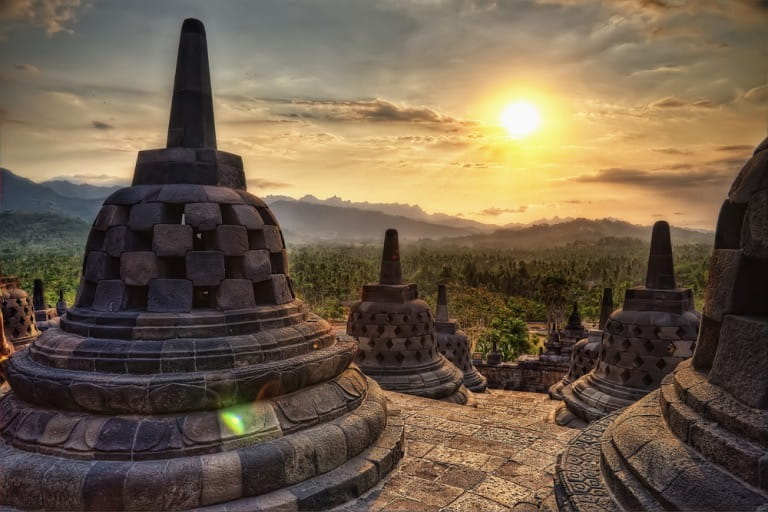
These 9th-century marvels are the pillars of Javanese heritage.
-
Borobudur: The world’s largest Buddhist monument.
-
Traveler Tip: Access to the upper structure is limited and requires a specific time-slot ticket. Booking several days in advance is highly recommended. To preserve the ancient stone, you are required to wear the provided Upanat sandals (traditional woven shoes) for the climb.
-
Prambanan: A majestic Hindu temple complex dedicated to the Trimurti.
2. Yogyakarta (The Cultural Soul)
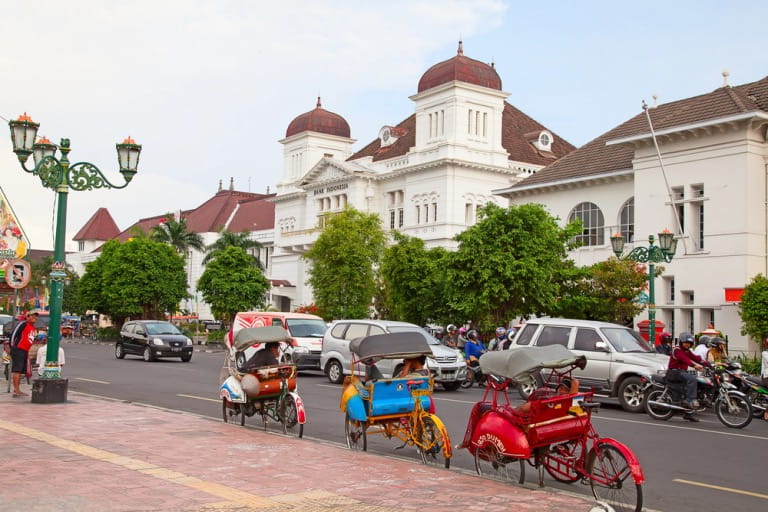
Known as “Jogja,” this is the only Indonesian province still ruled by a pre-colonial monarchy. Visit the Kraton (Sultan’s Palace), the underground mosque of Tamansari, and the bustling markets of Malioboro Street.
3. Mount Bromo (East Java)
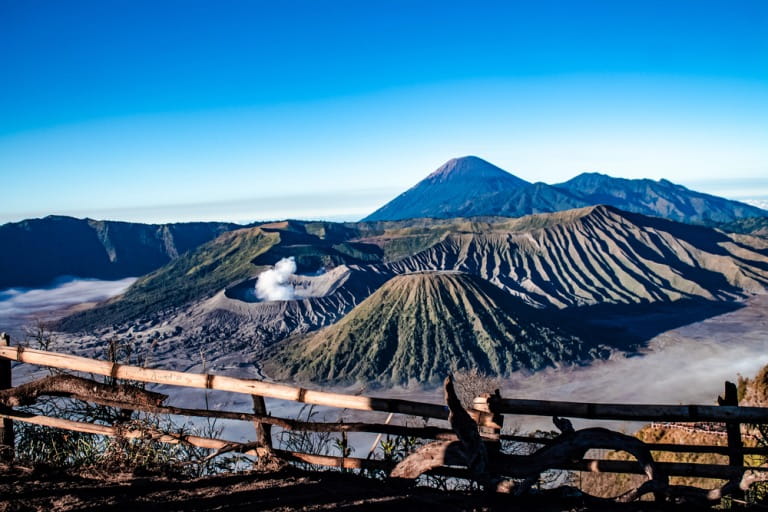
The sunrise over Mount Bromo, sitting inside a massive ancient caldera, is one of the most iconic sights in Southeast Asia. It offers a prehistoric landscape of ash and steam that feels like another planet.
4. Ijen Crater (The Blue Fire)
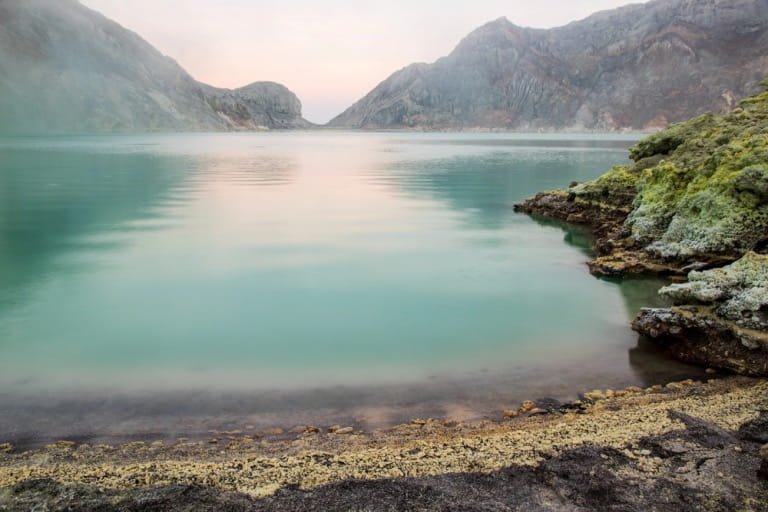
Famous for its turquoise acid lake and the rare phenomenon of “Blue Fire” caused by ignited sulfur gas.
-
Safety Note: Travelers should use a professional-grade gas mask, as sulfur fumes can be intense. Basic safety checks are common at the trailhead.
5. Tumpak Sewu Waterfall
This “Thousand-Fold” waterfall is a spectacular natural curtain of water in a deep, lush canyon. Its semi-circular shape provides one of the most dramatic views in the region.
6. Major City Hubs: Jakarta, Bandung & Surabaya
-
Jakarta: A massive metropolis ideal for museums, high-end shopping, and the historic “Kota Tua” district.
-
Bandung: A cool, highland city famous for its colonial architecture and coffee culture.
-
Surabaya: The modern gateway to East Java and the best starting point for volcano tours.
Java vs. Bali: Which One Should You Choose?
| Feature | Java Island | Bali |
| Primary Draw | Volcanoes, Temples, Adventure | Beaches, Surfing, Wellness |
| Culture | Local/Islamic/Javanese Fusion | Balinese Hindu |
| Pace | Fast, Authentic, Urban | Relaxed, Tourist-centric |
| Transport | High-speed trains, extensive rail | Private drivers, scooters |
How Many Days Do You Need on Java Island?
To avoid rushing through this massive island, plan your itinerary accordingly:
-
3–4 Days: Focused on Yogyakarta, Borobudur, and Prambanan.
-
5–6 Days: Yogyakarta + Mount Bromo.
-
7–10 Days: The “Golden Route”—Jakarta/Bandung to Yogyakarta, ending with the East Java volcanoes.
-
12+ Days: A full West-to-East exploration ending at the Bali ferry crossing.
How to Travel Around Java

Java’s transportation network is highly developed compared to other regions in Indonesia.
-
Whoosh High-Speed Rail: The fastest way between Jakarta and Bandung (approx. 45 minutes).
-
KAI Executive Class Trains: An excellent way to travel long distances (e.g., Jakarta to Yogyakarta). Use the Access by KAI app for seats with panoramic views.
-
Ride-Hailing: Grab and Gojek are essential for city transport and food delivery.
How Much Does It Cost to Travel to Java?
These are rough daily estimates and can vary by season, exchange rate, and the number of guided transfers you book:
-
Budget: $30–$50/day (Trains, guesthouses, local street food).
-
Mid-range: $70–$120/day (Boutique hotels, private volcano tours, domestic flights).
-
Luxury: $200+/day (5-star hotels, luxury train compartments, private guides).
Practical Travel Tips & Updates
-
Arrival Card: Check the requirements for the All Indonesia Arrival Card, which is usually completed online within 72 hours before arrival to generate a QR code for immigration.
-
e-VOA: Only use the official government website for your Electronic Visa to avoid agency surcharges.
-
QRIS Payments: While digital QR payments are widely used in major cities, international travelers should still carry some cash, as linking foreign cards to local wallets is not always seamless.
-
Passport Condition: Indonesian immigration is extremely strict. A small tear or water stain can lead to denied entry.
-
Best Time to Visit: The Dry Season (May to October) is ideal. Volcano trails may close or have limited visibility during the wet season (November to April).
FAQ About Java Island
- Is Java a country or an island?
Java is an island within the country of Indonesia.
- Where is Java Island located?
Java is located in Southeast Asia, between Sumatra and Bali. Its southern coast faces the Indian Ocean.
- Is Jakarta on Java Island?
Yes, Jakarta is located on the northwest coast of Java and remains the country’s primary business and transport hub.
- Is Java Island worth visiting?
Absolutely. Java may be one of the best destinations in Indonesia for travelers who prefer active adventure, cultural depth, and volcanic landscapes over beach relaxation.
- Is Java good for first-time visitors to Indonesia?
Yes, but it is best for travelers who enjoy history and active sightseeing. If you want an easier, beach-focused holiday, Bali may feel simpler for a first trip.
- Can you travel from Java to Bali?
Yes. Most travelers take the ferry from Ketapang (East Java) to Gilimanuk (West Bali). Ferries run frequently throughout the day and night, and the crossing usually takes around 45–60 minutes. Foot-passenger tickets are usually inexpensive, but prices can vary by passenger type, vehicle, season, and booking platform.
- How many days are enough for Java Island?
While three to four days are enough for Yogyakarta and the main temples, a 7–10 day trip is better if you want to include Bromo, Ijen, and the major city hubs.
Final Thoughts
Java Island offers a rare experience where the pulse of the future—from bullet trains to gleaming skylines—beats in harmony with an ancient, soulful past. For those traveling from Russia or anywhere else in the world, Java is the ultimate frontier of the Indonesian experience.
